


Ordering the wrong part in mining is never just a small purchasing error. One incorrect component can delay a repair, extend downtime, increase freight costs, and create pressure across the entire operation.
That is why buying mining replacement parts for sale should never be treated like a simple catalog order. In mining, quarrying, construction, and heavy industrial environments, the right part affects uptime, safety, equipment performance, and long-term operating cost.
A reliable mining equipment parts supplier helps confirm fitment, review machine details, compare available options, coordinate logistics, and reduce the risk of costly ordering mistakes. For operations working under production pressure, that guidance can make the difference between a fast repair and a longer shutdown.
Millennium Machinery Parts & Service Corp provides heavy equipment parts, spare and wear parts, machinery solutions, and technical services for mining, construction, and heavy industrial operations. The company supports customers with OEM and aftermarket options, equipment repair services, machinery maintenance, and responsive parts sourcing across domestic and international markets.
Why Ordering the Wrong Mining Part Costs More Than the Part Itself
An incorrect part does not only waste money. It can affect the full repair timeline.
When a machine is already down, every extra day waiting for the correct component can impact production schedules, maintenance planning, labor availability, and equipment utilization. In mining and heavy industry, downtime often costs more than the part itself.
Poor fitment can also create repeat failures. A component may look similar but still have the wrong dimensions, mounting points, pressure rating, material strength, or wear profile. If that part is installed under load, it can damage surrounding systems or fail again quickly.
Common problems caused by ordering errors include:
- Delayed repairs
- Extra freight costs
- Repeat labor hours
- Missed production targets
- Damage to related components
- Emergency sourcing at higher prices
- Lower confidence in maintenance planning
The fastest order is not always the best order. The best order is the one that is confirmed correctly before the part ships.
What to Confirm Before Searching for Mining Replacement Parts for Sale
Before requesting a quote, collect the right information. A supplier can respond faster and more accurately when the details are clear from the beginning.
Machine make, model, and serial number
The machine model matters, but the serial number often confirms the exact version of the equipment. Manufacturers may update components within the same model line, which means two machines with similar model names may require different parts.
A serial number helps confirm:
- Correct part version
- Production range
- Equipment configuration
- Component updates
- Compatibility changes
- Technical documentation
Without the serial number, the risk of ordering the wrong part increases.
Existing part number or OEM reference
If the old part has a visible number, send it to your supplier. Even if the number is worn or incomplete, it may help with identification.
Part numbers help confirm:
- OEM reference
- Aftermarket alternatives
- Cross-reference options
- Superseded numbers
- Rebuilt or remanufactured options
This is especially important when sourcing replacement parts for mining equipment across multiple brands, models, and applications.
Clear photos of the failed component
Photos are useful when part numbers are missing, damaged, or hard to read.
Send photos of:
- The full component
- Close-up markings or tags
- Mounting points
- Wear areas
- Connection points
- Nameplates
- Visible damage
Photos should support the identification process, not replace it. Visual matching alone can be risky.
Application and operating conditions
Mining equipment works under heavy load, dust, vibration, impact, heat, and abrasive material. A part that works in a light-duty application may not perform correctly in severe mining conditions.
Tell your supplier how the machine is used. Include material type, duty cycle, operating hours, site conditions, and urgency. This helps confirm whether the part option is suitable for the actual job.
Common Ordering Mistakes That Cause Delays
Many ordering mistakes happen because the buyer is under pressure. When equipment is down, teams often rush to find the fastest available option. That urgency is understandable, but skipping verification steps can create bigger problems later.
Ordering by visual match only
Two parts can look almost identical and still perform differently. They may have different internal specifications, materials, dimensions, connection points, or tolerances.
A visual match can help start the identification process, but it should not be the final confirmation.
Ignoring serial number breaks
A serial number break happens when a manufacturer changes a component after a certain production point. This means machines from the same model family may not always use the same part.
Ignoring this detail can lead to incorrect orders, even when the model number appears correct.
Choosing only by the lowest price
The cheapest part can become expensive if it fails early, damages another system, or causes another shutdown.
A better decision considers:
- Fitment
- Reliability
- Lead time
- Supplier expertise
- Quality standards
- Total downtime risk
In mining, the lowest purchase price is not always the lowest total cost.
Not confirming stock and lead time
Before approving an order, confirm whether the part is actually available. A quote without a clear lead time can create confusion when production is waiting.
Ask for:
- Stock status
- Estimated shipping date
- Transit time
- Freight options
- Export requirements
- Possible delays
Fast communication matters when equipment is already down.
Forgetting related components
Some repairs require more than one part. A hydraulic component may need seals, hoses, fittings, filters, or hardware. A crusher wear component may require backing material, fasteners, or related liners.
Ask your supplier if related installation parts should be ordered at the same time. This can prevent a second delay after the main component arrives.
How a Mining Equipment Parts Supplier Helps Prevent Wrong Orders
A reliable mining equipment parts supplier should do more than send a price. The right supplier helps protect the repair process from avoidable mistakes.
For a broader look at sourcing, availability, and supplier selection, review our mining replacement parts for sale guide.
Part identification and cross-referencing
Technical suppliers can compare OEM numbers, aftermarket references, rebuilt options, and remanufactured alternatives. This is valuable when the original part is unavailable, discontinued, or delayed.
Cross-referencing should be handled carefully. A replacement option must match the machine, application, and operating conditions.
Fitment confirmation before shipment
Good suppliers verify details before the part leaves the warehouse. This may include checking the machine model, serial number, part number, photos, measurements, and application.
This step reduces the risk of receiving a part that cannot be installed.
Technical guidance for urgent repairs
Mining operations often need fast answers. A supplier with real equipment knowledge can help identify the likely issue, recommend the right part category, and guide the maintenance team during the ordering process.
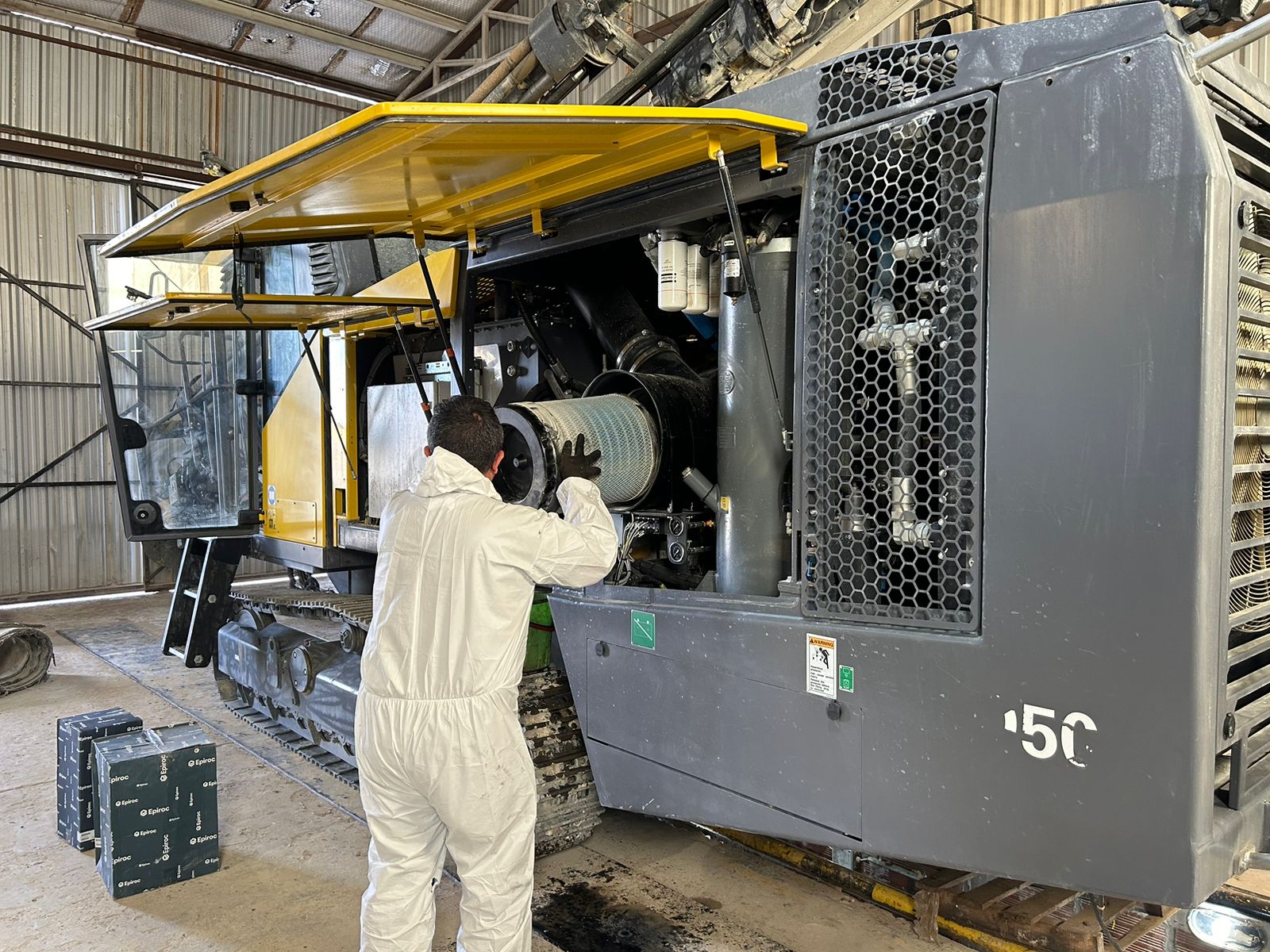
Millennium Machinery supports customers with spare and wear parts, equipment repair, maintenance solutions, Epiroc drilling equipment support, and Metso aggregate solutions. This gives customers access to more than parts sourcing. It gives them practical help from a team that understands demanding equipment environments.
Logistics coordination for remote and international sites
Mining and heavy industrial sites are not always easy to reach. A strong supplier understands freight coordination, export requirements, customs preparation, and delivery urgency.
For operations across the United States, Caribbean, South America, and other international markets, logistics coordination can be just as important as part availability.
Questions to Ask Before Buying Replacement Parts for Mining Equipment
Before placing an order, ask clear questions that reduce risk.
Use this checklist:
- Is this part confirmed for my exact machine serial number?
- Is it OEM, aftermarket, rebuilt, used, or remanufactured?
- What is the expected lead time?
- Is the part in stock or being sourced?
- Are related installation components required?
- Has the supplier reviewed photos or part numbers?
- Can the supplier help with cross-referencing?
- What shipping options are available?
- Is this option suitable for my application and duty cycle?
If the supplier cannot answer these questions clearly, the order may carry more risk than it should.
When Rebuilt or Remanufactured Parts May Be a Better Option
New parts are not always the fastest or most practical solution. In some cases, rebuilt or remanufactured components can help reduce downtime and control costs.
This may make sense when:
- New parts have long lead times
- The component has strong rebuild value
- The machine is older but still productive
- The operation needs a cost-effective repair option
- The supplier can confirm inspection and quality standards
However, rebuilt and remanufactured parts should be selected carefully. The quality of the inspection, repair process, and supplier expertise matters. For critical systems, severe damage, or warranty-sensitive applications, a new part may still be the better choice.
For a deeper decision guide, see when remanufactured mining equipment parts make sense and when new parts may be the better option.
The goal is not to choose the same option every time. The goal is to choose the correct option for the machine, urgency, application, and risk level.
A Simple Checklist Before You Place the Order
Before approving any order for mining replacement parts for sale, send your supplier complete information.
Use this checklist:
- Machine make and model
- Serial number
- Part number or OEM reference
- Photos of the component
- Photos of tags, plates, or markings
- Quantity needed
- Failure symptoms
- Site location
- Delivery urgency
- Application or duty cycle
- Any previous modifications
- Related parts needed
- Preferred shipping method
If your order includes rebuildable components, our remanufactured mining equipment parts overview explains how restored parts can help reduce lead times and control repair costs.
Also watch for red flags.
Be careful if:
- The supplier only confirms by photo
- The lead time is vague
- The part option is not clearly identified
- No one asks for the serial number
- The price seems low without explanation
- There is no technical guidance
- The supplier cannot explain compatibility
A few extra verification steps before ordering can prevent days or weeks of avoidable downtime.
Why Millennium Machinery Is the Right Partner for Mining Replacement Parts
Millennium Machinery is built to support operations that cannot afford guesswork. The company provides machinery parts, spare and wear parts, equipment services, repair support, OEM replacement parts, and industrial solutions for mining and construction operations.
Customers choose Millennium Machinery because they need more than a parts quote. They need a supplier that understands uptime, machine fitment, equipment applications, and logistics.
Millennium Machinery supports customers with:
- Heavy equipment spare parts
- Replacement parts for mining equipment
- OEM and aftermarket parts options
- Spare and wear parts
- Equipment repair services
- Machinery maintenance solutions
- Epiroc drilling equipment support
- Metso aggregate equipment solutions
- Domestic and international logistics coordination
When equipment is down, the right supplier helps you move faster without sacrificing accuracy.
Before You Order: What to Know
Q. What information do I need before buying mining replacement parts for sale?
You should provide the machine make, model, serial number, part number, photos, quantity needed, site location, delivery urgency, and failure symptoms. These details help the supplier confirm the correct part faster.
Q. Why is the serial number important when ordering replacement parts for mining equipment?
The serial number helps identify the exact machine configuration. Some equipment models have different part versions depending on production range, updates, or component changes.
Q. Can photos help identify the right mining equipment part?
Yes. Photos can help confirm markings, mounting points, wear patterns, and visible damage. However, photos should be used with part numbers, serial numbers, and technical verification.
Q. Should I choose OEM, aftermarket, rebuilt, or remanufactured parts?
It depends on the machine, application, urgency, budget, and reliability requirements. OEM may be best for critical systems, while aftermarket, rebuilt, or remanufactured parts may help reduce cost or lead time when properly verified.
Q. How can a mining equipment parts supplier help reduce downtime?
A reliable supplier helps confirm fitment, cross-reference part numbers, check availability, recommend suitable options, and coordinate shipping. This reduces the risk of ordering errors and helps equipment return to service faster.
Get the Right Part Before Downtime Gets Worse
A wrong part can turn an urgent repair into a longer shutdown. The right supplier helps you avoid costly mistakes, confirm fitment, and source dependable parts with speed and confidence.
Contact Millennium Machinery today for reliable mining replacement parts for sale, expert technical guidance, and help sourcing the correct components for your mining, construction, or heavy industrial equipment.