


A conveyor can deliver its material successfully and still create a costly problem on the return journey. Fine particles that remain attached after discharge travel back with the belt, accumulate around rollers and fall onto walkways or beneath the structure. Over time, this seemingly minor loss of material can become a recurring maintenance expense.
Conveyor belt cleaners are mechanical devices designed to remove residual bulk material from a belt after it discharges its load. A cleaning system typically uses one or more scraper blades held against the belt with a controlled contact force. Mining and aggregate operations use these devices to manage carryback, reduce spillage and protect the conveyor’s return-side components.
What is conveyor belt carryback?
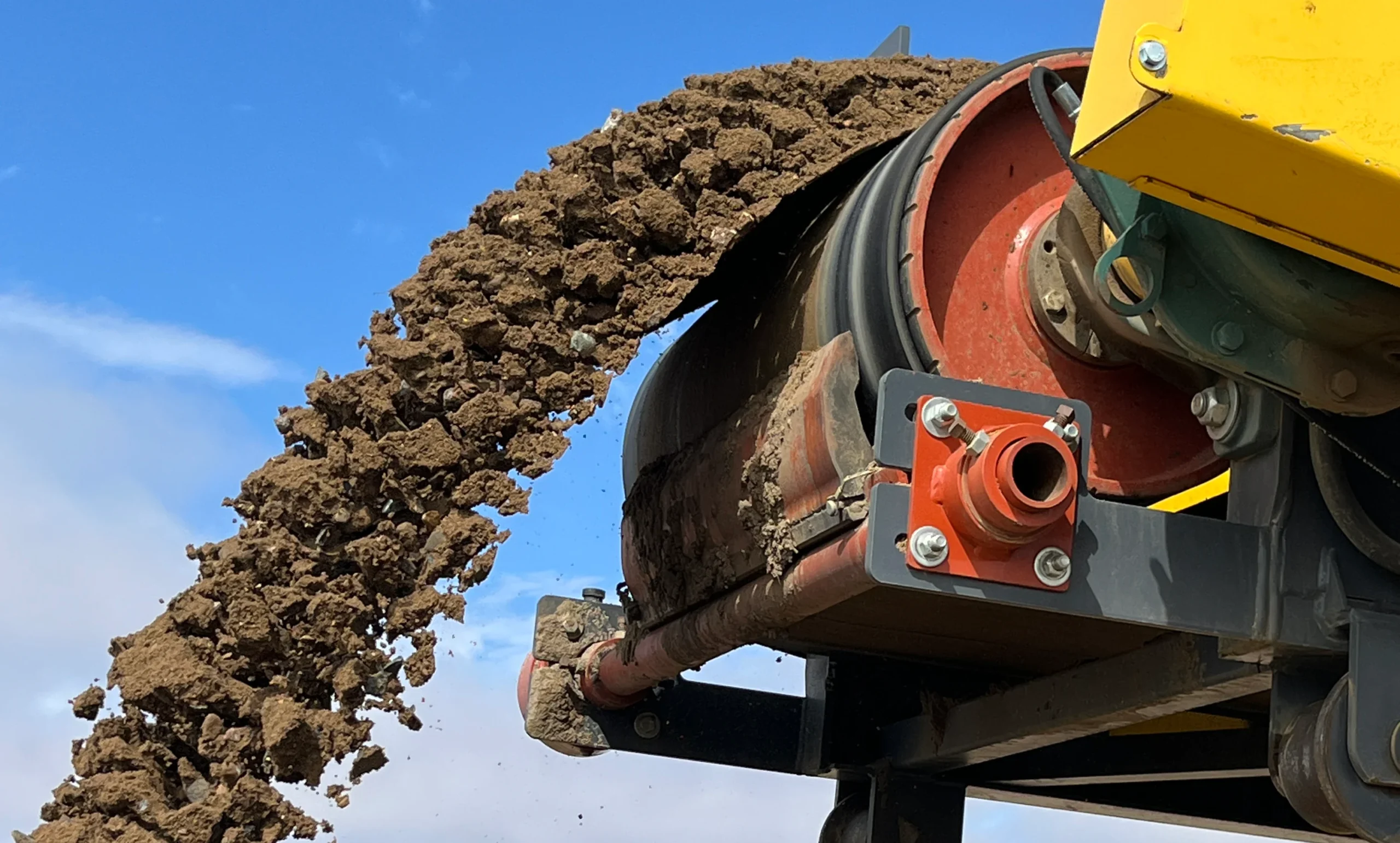
Carryback is the material that remains attached to the carrying surface after the belt passes its discharge point. Moist fines, clay and crushed mineral particles are especially capable of adhering to the surface. As the belt runs along its return path, vibration and contact with rollers can dislodge this residue at locations far from the intended discharge chute.
Carryback is different from loading-zone spillage, which occurs when material escapes from the sides of a loaded belt. A scraper cannot correct an overloaded transfer point or a damaged skirt seal. Identifying where material first escapes helps determine whether the solution requires cleaning equipment, transfer-point changes or both.
Accumulated residue can also change the contact conditions at rollers and pulleys, contributing to uneven operation. Our guide to conveyor belt tracking problems explains why alignment issues must be evaluated independently rather than assuming that a new cleaner will solve every conveyor fault.
Types of conveyor belt cleaners
Primary belt cleaner
A primary cleaner is normally fitted near the discharge pulley, where it removes a substantial portion of the material still attached to the belt. Its location allows removed material to fall into the intended discharge area when the chute is correctly designed. Polyurethane blades are a common option, although exact blade design depends on the cleaner and application.
Primary cleaning is especially valuable when substantial wet or coarse residue remains after discharge. It is not necessarily sufficient when fine particles adhere strongly to the belt.
Secondary belt cleaner
A secondary belt cleaner is usually positioned farther along the return side, after the primary cleaning stage. Its job is to address remaining residue, often finer material that survives the first blade. Some designs use segmented blades that accommodate variations across the belt surface.
Secondary cleaning can be particularly useful in plants that handle moist aggregate or fine mineral products. The mounting location and blade specification must suit the belt’s support conditions and splice type.
Specialized cleaning devices
Brush cleaners may be appropriate for certain textured belts or applications involving dry, light material. Wash systems combine water and suitable cleaning arrangements where the plant can manage drainage and wastewater. Return-side plows remove loose material from the non-carrying surface before it becomes trapped between a pulley and belt. A plow serves a different purpose from a scraper that removes carryback from the carrying face.
For integrated material handling, MMPAS provides Metso aggregate equipment solutions that can be evaluated in the context of the entire processing plant.
How cleaner blades and tensioners affect results
A conveyor belt scraper must maintain suitable contact across the intended cleaning area without creating excessive resistance or damaging the belt. Polyurethane blades are widely used because they can offer a useful balance of flexibility and wear resistance. Carbide-tipped options may suit selected abrasive applications, particularly in compatible secondary cleaning arrangements. Neither material is automatically superior for every duty.
Mechanical fasteners, raised splices, surface damage and reversing conveyors can create additional compatibility requirements. A blade intended for a smooth, continuously operating belt may be inappropriate for a different configuration. Always confirm allowable belt speed, temperature, direction of travel and splice compatibility with the manufacturer.
The tensioner matters as much as the blade. Too little contact can leave residue behind, while excessive pressure may accelerate wear or increase friction. The correct setting is specific to the cleaner model; increasing tension blindly is not a reliable way to improve cleaning.
What are the benefits of a well-selected conveyor cleaning system?
The first benefit is containment: more residual material is removed where the plant is designed to receive it. This can reduce the volume of material workers must collect from beneath the return path. A cleaner belt can also limit buildup on compatible rollers and pulley surfaces, reducing one potential source of irregular contact and wear.
Plants reviewing broader operating losses can also consult our crushing and screening efficiency guide to understand how different machines affect overall productivity.
How to choose the right conveyor belt cleaners
Begin by documenting the material. Is it dry and free-flowing, wet and cohesive, sharp and abrasive, or variable throughout the day? Collect information during the conditions that produce the worst carryback, rather than judging the system only when the feed is dry.
Next, record the belt width, speed, thickness, pulley diameter, direction of operation and splice construction. Check the discharge chute and available mounting space. The actual material-bearing width is also relevant because material may not occupy the full belt surface. Provide drawings or photographs taken safely from designated observation points.
Decide whether one cleaning stage is adequate or whether a combined primary and secondary arrangement is justified. Consider how workers will inspect and replace blades under isolation, and whether suitable replacement items can be stocked locally. MMPAS can assist with replacement-part sourcing when exact component identification is required.
A practical way to calculate the cost of carryback
Suppose a quarry records 40 kilograms of residual material per hour falling from a conveyor return path during a ten-hour production shift. That represents 400 kilograms requiring management each shift. Over 250 comparable operating days, the illustrative total is 100 metric tons. Not all of it is necessarily lost product; some may be recovered, while contaminated residue may require disposal.
Estimate cleanup labor, handling expenses, replacement components and relevant production interruptions separately. After installing a suitable cleaner, repeat measurements under comparable feed and operating conditions. This gives maintenance managers a better basis for evaluating savings than an unverified percentage claim.
Conveyor belt maintenance: when should scraper blades be replaced?
A worn blade may leave visible streaks, uneven residue or a persistent band of material across the belt. Unequal wear may indicate incorrect contact, buildup, misalignment or belt-surface irregularities. Inspect the tensioner, mounting hardware and chute condition as well as the blade itself. Follow the specified wear indicators and replacement limits for the model.
Never adjust, touch or remove a cleaner near an operating belt unless a manufacturer-approved system and site procedure explicitly permit the task with adequate safeguards. Routine servicing should follow site lockout and isolation requirements, including stored-energy controls. If wear repeats unexpectedly, seek technical service support before purchasing another identical component.
Frequently asked questions
Do mining conveyors need both primary and secondary cleaners?
Not always. A primary belt cleaner may be sufficient for some dry, relatively easy-cleaning materials. Where significant fine or sticky residue remains, a compatible secondary cleaner may improve results. Base the decision on observed carryback and equipment constraints.
What is the best scraper material for an abrasive conveyor?
Polyurethane and carbide-tipped designs are both used in industrial applications, but suitability depends on abrasion, impact, belt construction, splice type and operating speed. A supplier should verify compatibility with the specific conveyor rather than recommending a universal blade material.
Can a belt cleaner damage a conveyor belt?
Yes. An incompatible blade, unsuitable tension, damaged mounting arrangement or interaction with a splice can damage the surface. Correct selection and installation, regular inspections and compliance with the manufacturer’s operating limits help reduce this risk.
How often should conveyor belt cleaners be inspected?
Inspection intervals depend on the equipment manufacturer’s instructions and the conveyor’s operating conditions. High-abrasion or wet-material duties may require more frequent checks. Track wear trends and residue changes so inspection frequency reflects actual experience rather than an arbitrary schedule.
Can conveyor belt cleaners prevent belt mistracking?
They may help reduce buildup that contributes to tracking difficulties, but they do not correct misaligned pulleys, structural problems, incorrect loading or damaged components. Persistent mistracking requires a separate mechanical and process assessment of the conveyor.
What information is needed to order a replacement scraper?
Provide the cleaner model, part number if available, belt dimensions, speed, material, splice type and safe photographs of the installed assembly. These details help distinguish a compatible replacement blade from an item that merely appears similar.
Find the right cleaning system for your operation
Conveyor belt cleaners work best when they are selected as part of the complete material-handling system. Millennium Machinery Parts & Service supports mining and aggregate operations with industrial spare and wear parts and equipment expertise. Submit your conveyor specifications through our product enquiry page to discuss suitable replacement or upgrade options.