


Conveyor belt tracking problems can interrupt production, damage equipment, and increase maintenance costs in mining and quarrying operations. When a conveyor belt moves away from its intended path, the resulting misalignment can cause uneven wear, material spillage, and unexpected shutdowns.
The most common causes of conveyor belt mistracking include misaligned rollers, material buildup, improper belt tension, off-center loading, and problems with pulleys or supporting structures.
Correcting these issues requires identifying the underlying cause rather than repeatedly adjusting the belt.
This guide explains how conveyor belt tracking works, why belts move out of alignment, and what maintenance teams can do to improve conveyor reliability.
What Is Conveyor Belt Tracking?
Conveyor belt tracking describes how accurately a belt follows its intended path through the conveyor system.
A correctly tracking belt runs within its designed alignment limits as it travels across pulleys and conveyor belt rollers.
When the belt begins drifting toward one side, the condition is commonly called conveyor belt mistracking or misalignment.
Misalignment can create additional friction and uneven loads on conveyor components.
Over time, persistent mistracking may lead to:
- Damaged belt edges
- Premature roller and pulley wear
- Material spillage
- Higher cleanup and maintenance costs
- Unexpected production interruptions
- Increased risk of belt failure
For high-volume quarry and mining operations, even a relatively short conveyor shutdown can affect downstream crushing and screening activities.
MMPAS supports aggregate processing operations through its Metso crushing, screening, and conveyor solutions.
What Causes Conveyor Belt Tracking Problems?
Understanding the cause of belt misalignment is the first step toward an effective repair.
1. Misaligned Conveyor Rollers
Conveyor rollers and idlers support and guide the belt along its travel path.
When these components are positioned incorrectly, damaged, or mounted in a distorted frame, they can influence belt movement.
Misalignment may develop because of:
- Loose mounting hardware
- Worn roller bearings
- Improper idler positioning
- Structural movement
- Incorrect installation
Maintenance teams should inspect roller condition and alignment before making any adjustments.
Replacing a damaged roller without correcting the underlying structural problem may not resolve the issue.
2. Improper Conveyor Belt Tension
Conveyor belt tension must remain within the range specified for the equipment.
Insufficient tension can contribute to slippage, while excessive tension may place unnecessary stress on bearings, pulleys, and belt components.
Tension problems may also affect tracking, particularly when combined with other mechanical issues.
Operators should check the take-up arrangement and follow the conveyor manufacturer’s tensioning procedure.
3. Material Buildup on Pulleys
In mining and quarrying environments, dust, fines, wet material, and debris can accumulate on pulleys or rollers.
Uneven buildup can change the effective pulley surface and interfere with consistent belt movement.
This problem is particularly relevant in applications handling damp aggregates or sticky materials.
Inspecting belt cleaners and removing material buildup during approved maintenance shutdowns can help prevent recurring misalignment.
4. Off-Center Material Loading
Material that lands consistently on one side of the conveyor can apply uneven forces to the belt.
This can occur because of incorrect chute design, worn transfer components, or changes in material flow.
A conveyor may appear mechanically aligned yet still mistrack under load.
In such cases, changing the position of an idler may provide only temporary improvement.
The actual solution may require correcting the loading arrangement.
5. Pulley Alignment Problems
Drive, tail, bend, and snub pulleys influence belt movement.
If pulley shafts are not aligned correctly with the conveyor structure, the belt may drift.
Worn bearings, damaged supports, and incorrect installation can also contribute.
Pulley alignment should be checked using the manufacturer’s procedures and suitable measurement equipment.
6. Damaged or Poorly Spliced Conveyor Belts
A belt with damaged edges, uneven wear, or an incorrectly made splice may be difficult to track consistently.
A poor splice can introduce geometry problems that become noticeable during belt operation.
If the belt repeatedly moves toward the same side despite correcting external components, its condition and splice quality should be evaluated.
How to Fix Conveyor Belt Tracking Problems
A systematic troubleshooting process helps avoid unnecessary adjustments and repeated repairs.
Step 1: Identify Where Mistracking Begins
Determine whether the belt moves out of alignment near the loading zone, drive pulley, tail pulley, or another section.
Also check whether the problem appears during startup, under load, or throughout operation.
The location and operating conditions provide important diagnostic clues.
Step 2: Inspect the Conveyor Structure
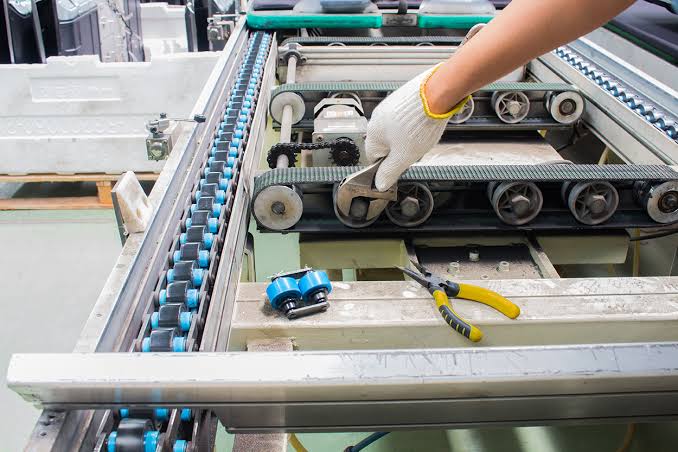
Check supporting frames, mounting points, idler stands, and pulley alignment.
Look for damage, loose fasteners, distortion, and uneven mounting conditions.
Any structural issue should be addressed before attempting fine tracking adjustments.
Step 3: Examine Rollers and Pulleys
Inspect rollers for damage, seized bearings, excessive wear, and material buildup.
Confirm that pulleys are in suitable condition and that the belt-contact surfaces are clean.
Replace components that fail the manufacturer’s inspection criteria.
For equipment-related replacement needs, MMPAS offers spare and wear parts sourcing for mining and industrial operations.
Step 4: Check Belt Tension
Evaluate the take-up system and confirm that belt tension meets equipment requirements.
Avoid increasing tension simply to force a belt back into alignment.
Improper tension adjustments can create additional mechanical problems.
Step 5: Inspect Material Loading
Examine the transfer chute and loading point.
Material should enter the conveyor in a controlled manner suited to the belt and system design.
If loading consistently creates uneven forces, correct the transfer arrangement before continuing with tracking adjustments.
Step 6: Perform Controlled Tracking Adjustments
Once structural, loading, and component problems are corrected, tracking adjustments may be necessary.
Only trained, authorized personnel should perform these adjustments in accordance with the manufacturer’s procedures.
Important: Conveyor systems contain serious nip-point, entanglement, and stored-energy hazards. Never reach into a moving conveyor or adjust hazardous components without the required safeguards. Apply lockout/tagout and energy-isolation procedures before inspection or repair as required.
Step 7: Verify Belt Performance
After repairs, verify tracking under approved operating conditions.
Check whether the belt remains properly aligned during startup and normal material loading.
Monitor the system for repeated drift, abnormal noise, material spillage, or excessive vibration.
Common Conveyor Tracking Problems and Their Solutions
| Problem | Possible cause | Recommended action |
|---|---|---|
| Belt drifts toward one side | Misaligned idlers or pulleys | Inspect and correct alignment |
| Belt tracks correctly empty but drifts when loaded | Uneven loading | Inspect chute and material distribution |
| Belt edges wear rapidly | Persistent mistracking | Investigate contact points and alignment |
| Belt slips at drive pulley | Insufficient traction or tension | Inspect drive system and take-up |
| Belt changes direction unpredictably | Buildup or multiple alignment issues | Inspect rollers, pulleys, and loading |
| Tracking problems begin after belt replacement | Splice or installation problem | Verify splice and installation geometry |
These are diagnostic starting points. The correct repair depends on the equipment design and actual operating conditions.
How to Prevent Conveyor Belt Misalignment
Preventive maintenance is generally more effective than repeatedly responding to conveyor failures.
Inspect Conveyor Rollers Regularly
Damaged or seized rollers can accelerate belt wear and create tracking problems.
Maintenance teams should inspect rotating components at intervals appropriate for operating conditions.
Keep Pulleys and Belt Cleaners in Good Condition
Material accumulation can interfere with belt movement and reduce equipment reliability.
Regularly inspect cleaners and remove buildup using approved maintenance procedures.
Monitor Belt Tension and Wear
Check tension, belt edges, splice condition, and visible damage.
Changes in belt condition can indicate developing problems before a major failure occurs.
Maintain Accurate Replacement Parts Records
Record conveyor specifications, part numbers, component dimensions, and previous failures.
This information can make emergency parts sourcing more efficient.
MMPAS explains how to organize replacement components in its mining equipment parts inventory strategy.
Use Qualified Maintenance Support
Recurring mistracking may indicate underlying mechanical or installation problems that require technical inspection.
MMPAS provides equipment service support for industrial and mining machinery, helping operations evaluate repair and maintenance needs.
Need Conveyor Components or Maintenance Support?
Persistent mistracking can damage belts and increase production interruptions.
Request Conveyor Parts & Technical Support
Contact MMPAS to discuss your equipment requirements, replacement components, or machinery support needs.
Why Conveyor Tracking Matters for Crushing and Screening Operations
A conveyor does not operate independently of the rest of a quarry or mining plant.
Material transport influences crushing capacity, screening efficiency, stockpile management, and overall production continuity.
If a conveyor repeatedly shuts down, upstream and downstream equipment may be affected.
For this reason, belt tracking should be included in the wider equipment maintenance strategy.
Learn more about connected plant performance in MMPAS’s Metso crushing and screening efficiency guide.
When maintenance teams identify and resolve conveyor problems early, they can reduce avoidable interruptions and support more predictable production.
Frequently Asked Questions About Conveyor Belt Tracking
What causes a conveyor belt to track to one side?
Common causes include misaligned idlers, pulley alignment problems, material buildup, uneven loading, incorrect belt tension, and belt damage. A proper inspection is required to identify the specific cause.
How do you correct conveyor belt misalignment?
Start by inspecting the structure, rollers, pulleys, belt condition, tension, and material loading. Correct mechanical or loading problems before performing manufacturer-approved tracking adjustments.
Can improper belt tension cause tracking problems?
Yes. Incorrect tension can contribute to unstable conveyor operation, particularly when combined with pulley, idler, or loading issues. Tension must be adjusted according to equipment specifications.
Why does my conveyor belt track differently when loaded?
Uneven material loading can create forces that change belt behavior. The transfer chute, loading position, and distribution of material should be inspected.
How often should conveyor belt alignment be checked?
Inspection frequency depends on equipment design, operating hours, material characteristics, and manufacturer recommendations. Systems exposed to abrasive materials and demanding conditions may require more frequent checks.
Can damaged conveyor rollers cause belt mistracking?
Yes. Damaged, seized, or incorrectly positioned rollers can influence belt movement. Replacing failed rollers and correcting mounting problems may improve tracking.
Improve Conveyor Reliability With MMPAS
Conveyor belt tracking problems are often symptoms of larger maintenance issues. Correcting the underlying cause can reduce component wear, limit material loss, and help maintain reliable plant operations.
Millennium Machinery Parts & Service supplies mining and aggregate equipment solutions, replacement parts, and technical assistance.
Whether your operation needs conveyor-related components or support for broader crushing and screening equipment, MMPAS can help you evaluate the next step.