


An excavator may have a healthy engine and responsive hydraulics but still struggle to move reliably across a worksite. Its undercarriage supports the machine through every turn, repositioning movement and uneven surface. When components wear together, replacing the most visibly damaged item may not solve the underlying issue.
Excavator undercarriage parts include track chains, shoes, pins, bushings, track rollers, carrier rollers, drive sprockets, idlers and track-adjustment assemblies. Together, they support the machine’s weight, distribute ground pressure and transmit travel force. Maintaining their compatibility and condition is essential for tracked excavators working in mining, quarrying and construction.
How does an excavator undercarriage work?
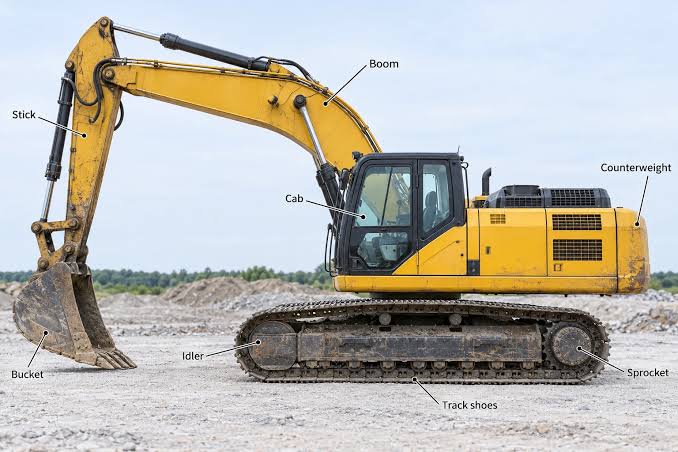
The travel motor and final drive deliver rotational force to the drive sprocket. Its teeth engage the track chain, moving the track around the rollers and idler. Track shoes contact the ground, while the lower rollers carry the machine’s load through the track links. The idler and adjustment mechanism help guide the chain and maintain the specified track tension.
The upper structure can rotate independently of the tracks, but digging and swinging loads are still transmitted to the supporting undercarriage. Excavators that spend long periods loading rock, breaking material or traveling over rough terrain may experience different wear patterns even if their operating hours are similar. See our overview of mining and construction equipment types for context on these differing equipment duties.
Main excavator undercarriage parts and their functions
Track chains, pins and bushings
The track chain consists of interconnected links that articulate as the track moves around the undercarriage. Pins and bushings form the joints and help maintain the correct relationship between the chain and the drive sprocket. Internal joint wear can increase effective chain pitch, affecting how smoothly the teeth engage the bushings. External bushing wear is another important measurement and may not progress at the same rate.
Track shoes and grousers
Track shoes provide the contact area that supports the excavator on the ground. Raised features called grousers improve traction in suitable conditions. Shoe width and profile affect flotation, maneuverability and loads on the chain. Wider shoes may be useful on soft ground, but unnecessary width can increase turning resistance and bending loads on hard surfaces. Follow the approved configurations for the machine and terrain.
Excavator track rollers and carrier rollers
Lower track rollers support machine weight and guide the chain beneath the track frame. Carrier rollers, where fitted, support the returning upper section. Worn roller surfaces, leaks or a roller that no longer turns correctly can accelerate wear elsewhere. Roller dimensions and flange arrangements must match the machine’s undercarriage design.
Excavator sprockets and idlers
The drive sprocket engages the chain bushings to transmit travel force. As the engagement surfaces wear, the teeth can develop abnormal profiles. The idler supports and guides the chain at the opposite end, working with the adjustment system to maintain appropriate tension. A worn sprocket, elongated chain and worn idler should be considered together, not simply ordered as unrelated components.
Track adjuster and recoil system
The adjustment system maintains track sag within manufacturer limits, while recoil arrangements help accommodate certain transient loads. Designs vary by machine. These assemblies can contain high-pressure grease or stored spring energy and must only be serviced by trained personnel following the manufacturer’s procedure. Do not loosen adjustment fittings or dismantle a recoil assembly without the required safeguards.
Seven signs of excessive undercarriage wear
1. Repeated loose tracks: a track that repeatedly falls outside its specified sag range may indicate chain wear, leakage or an adjustment-system issue rather than a simple need for tensioning.
2. Abnormal sprocket tooth shape: thinning, uneven contact marks or hooked profiles may indicate excessive engagement wear, especially when accompanied by chain-pitch changes.
3. Roller leakage or flat spots: visible lubricant loss and irregular roller surfaces warrant inspection because impaired rotation can increase sliding contact with the chain.
4. Uneven rail or flange wear: different patterns on opposite sides of the same component may indicate alignment issues, side loading or operation on sloping ground.
5. Damaged track shoes: cracks, missing hardware or bent shoes can affect load distribution and require attention before continued operation.
6. Excessive noise or jerky travel: abnormal mechanical movement may reflect chain or sprocket issues, but travel motors, final drives and hydraulic problems must also be considered.
7. Recurring track derailment: a track that repeatedly comes off its intended path requires a qualified investigation of tension, guidance components, wear and operating conditions.
If a machine becomes difficult to control, shows structural damage or has a displaced track, stop using it and arrange a safe assessment. MMPAS offers heavy equipment repair services for machinery requiring technical evaluation.
Why undercarriage components wear prematurely
Abrasive ground can act like a grinding medium between contact surfaces. Packed mud and stones may alter the effective tension or interfere with component movement. Excessively tight tracks increase loads within the system, while excessive looseness can increase the risk of poor engagement and derailment. Required sag is model-specific and may vary with operating conditions.
Operating technique also matters. Repeated abrupt turns on abrasive surfaces, unnecessary travel and prolonged side loading can contribute to uneven wear. Attachments and working methods affect load distribution as well. When assessing a breaker-equipped machine, our hydraulic breaker selection guide explains why matching attachment requirements to the carrier is important.
How to inspect and measure excavator undercarriage parts
A visual inspection can identify cracks, missing hardware, leaks and abnormal surface conditions, but remaining service life requires measurement. Qualified personnel should measure track-link rail height, chain pitch, bushing diameter, roller diameter, idler contact surfaces and grouser height using the tools and procedures specified by the manufacturer. Record values separately for the left and right sides.
An illustrative measurement shows why the wear limit matters. If a new component measures 100 millimeters and the specified worn limit is 80 millimeters, a current measurement of 85 millimeters has consumed 75% of the allowed dimensional wear range. This does not necessarily mean 25% of operating life remains: wear rates can change, and actual service limits depend on the component. Use the correct manufacturer wear chart rather than these example dimensions.
Should you replace one part or the complete undercarriage?
An isolated damaged roller or shoe may be replaceable if related components remain within specification and the manufacturer permits the repair. However, fitting a new sprocket to a substantially worn chain can create poor engagement between the new tooth profile and the worn chain pitch. Replacing several matched components may be more economical when their wear limits are approaching together.
For equipment nearing retirement, compare repair expenditure with alternative machinery sales and leasing options before authorizing a major rebuild.
How to order compatible undercarriage replacement parts
Provide the equipment make, model, serial number, track configuration and existing part numbers. Include a condition report. Confirm the exact configuration rather than relying on dimensions alone.
Review our guide to ordering the correct industrial machinery parts before finalizing a purchase. Confirm compatibility, lead time and installation requirements.
Frequently asked questions
How long do excavator undercarriage parts last?
There is no reliable universal service-life figure. Ground abrasiveness, travel distance, machine weight, operating technique, track tension and component quality influence wear. Measured condition trends and manufacturer wear limits are better replacement indicators than operating hours alone.
Can you replace just one excavator track roller?
Yes, in some circumstances an individual roller can be replaced if the surrounding components remain serviceable and the new roller is compatible. Inspect adjacent rollers, track links and mounting conditions to determine whether an isolated replacement is appropriate.
What causes an excavator track to keep coming off?
Potential causes include incorrect track tension, worn idlers or rollers, damaged chain links, alignment problems and severe side loading. Repeated derailment is not normal operation and should be investigated before the machine is returned to service.
Are aftermarket undercarriage parts suitable for mining excavators?
Compatible aftermarket parts may be suitable when their dimensions, engineering specifications, load capacity and material properties meet the application requirements. Evaluate supplier documentation and warranty terms rather than treating every aftermarket component as equivalent to an original part.
Should sprockets and track chains be replaced together?
They should be assessed as interacting components because chain pitch and tooth profile affect engagement. Where both are significantly worn, a matched replacement may be advisable. Follow the manufacturer’s measurements and replacement recommendations for the specific undercarriage.
How can operators reduce excavator undercarriage wear?
Keep the undercarriage clear of accumulated material using approved safe methods, maintain specified track tension and avoid unnecessary travel or aggressive turning when conditions permit. Regular inspections and consistent measurement records help identify developing problems before they cause larger failures.
Keep your excavator moving with the right parts
Replacing excavator undercarriage parts should begin with accurate identification and a realistic understanding of the machine’s working conditions. Millennium Machinery Parts & Service supplies heavy equipment spare parts for demanding industrial applications. Request a quotation with your serial number and wear report to discuss component availability and suitable replacement options.