


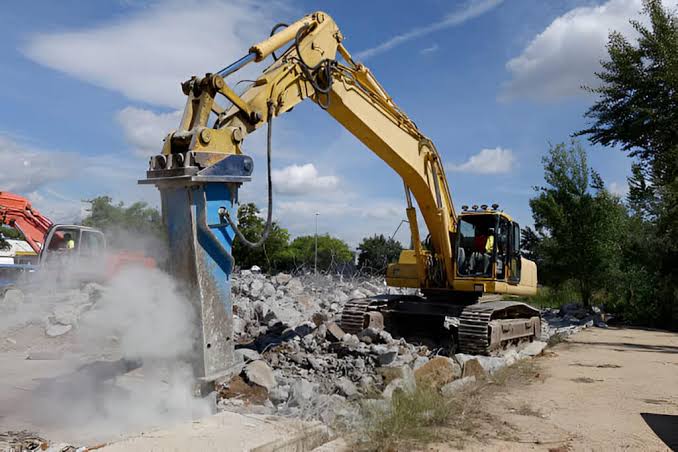
Choose a hydraulic breaker by matching the excavator’s approved attachment weight, auxiliary hydraulic oil flow, working pressure, mounting interface, and application to the breaker’s published requirements. Carrier weight alone is not enough. A breaker can fit the excavator mechanically while receiving too much or too little hydraulic flow. Confirm the exact carrier and breaker models with both manufacturers, including back pressure, return-line routing, and any required control settings, before installation.
Why the right breaker matters
A hydraulic breaker converts hydraulic energy from an excavator into repeated impacts that fracture rock, concrete, or other material. A good match can improve productivity and reduce unnecessary wear. A poor match can make the carrier unstable, overheat the oil, stress the boom, damage tools, or shorten breaker life. Contractors often focus on advertised impact energy or price, but the working system includes the excavator, hydraulic circuit, mounting bracket, hoses, breaker, tool, and material. Choosing the attachment requires checking all of them together.
Step 1: identify the excavator exactly
Start with the excavator manufacturer, model, serial number, operating weight, boom configuration, and auxiliary hydraulic specifications. Machines with the same model family may have different pumps, control settings, or factory attachment packages. The operating weight should reflect the actual machine configuration rather than an assumed catalog value. Record the quick coupler, mounting pin dimensions, and available hose connections. These details prevent a common mistake: ordering a breaker that is appropriate for the general excavator class but incompatible with the machine on site.
Step 2: match carrier weight and stability
Breaker manufacturers publish an approved carrier weight range for each model. That range is an initial screening tool, not the only criterion. A breaker that is too heavy may affect stability, lifting geometry, and boom loads. An undersized attachment may be inefficient for the intended material and duty cycle. Evaluate the machine’s configuration, working reach, slope conditions, and manufacturer’s attachment limits. Never assume that an excavator can safely handle any breaker that its coupler can physically lift. Confirm the approved pairing before field use.
Step 3: verify hydraulic oil flow
Oil flow is usually specified in liters per minute or gallons per minute. The excavator must deliver flow within the breaker’s operating range at the relevant engine speed and settings. Insufficient flow can reduce impact frequency or cause poor performance. Excess flow may create overheating or component stress unless correctly controlled. Compare the manufacturer’s breaker data with the carrier’s auxiliary circuit, not the excavator’s total pump capacity. Ask whether the machine has adjustable flow settings and whether those settings can be locked or documented for the attachment.
Step 4: check working pressure and back pressure
Operating pressure is another compatibility requirement, but it is not interchangeable with flow. The breaker needs a suitable pressure range and an appropriately configured return line. Excessive return-line back pressure can reduce performance and contribute to failures. Some breaker models have specific requirements for relief valves, accumulators, and return-to-tank plumbing. Use the installation instructions and approved hydraulic schematic. Do not increase relief pressure simply to make a breaker hit harder; that can damage the carrier or attachment and create serious safety risks.
Step 5: choose the breaker class for the work
Small breakers can be useful for light demolition, trenching, and work in restricted spaces. Medium models suit a broad range of construction and quarry-support tasks. Larger units are selected for demanding rock excavation or heavy demolition where the carrier and hydraulic system are designed for the load. Material type matters: fractured limestone, reinforced concrete, and hard massive rock behave differently under impact. Consider working hours per day, expected duty cycle, noise limits, and access restrictions. The biggest breaker available is not necessarily the most productive choice.
Step 6: select the right working tool
The tool at the breaker tip must suit the material and method. A moil point is often used for general breaking and penetration, while a chisel can help direct fractures in some rock or concrete applications. Blunt tools may be useful for breaking oversized rock through impact rather than penetration. Exact tool options vary by breaker model and manufacturer. Incorrect tool choice can reduce production and accelerate bushing or retainer wear. Operators should use the approved tool and avoid prying, levering, or using the breaker as a lifting device.
Step 7: compare productivity, not only impact figures
Impact energy and blows per minute are useful specifications, but they do not tell the whole productivity story. Breaking performance also depends on contact angle, downforce, material fractures, tool condition, operator technique, and how often the excavator repositions. A breaker that strikes rapidly but cannot fracture the material efficiently may waste time. Request application guidance from the manufacturer or supplier and, when feasible, compare output on representative material. The right measurement is productive work completed safely per hour, not a single catalog number.
Step 8: confirm mounting and hose compatibility
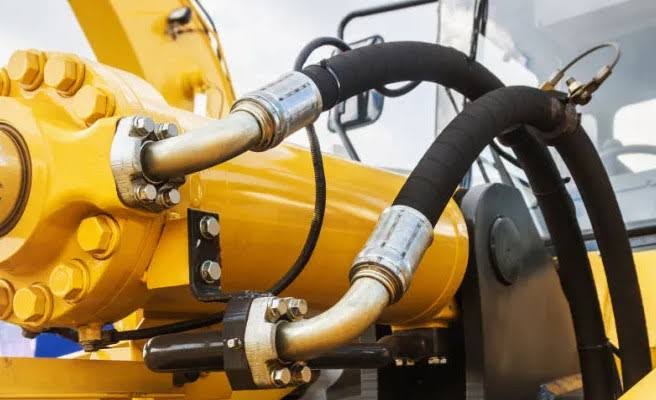
A breaker needs a properly engineered bracket, compatible pins or coupler, and correctly routed hydraulic hoses. Hose length must accommodate boom motion without abrasion, pinching, or tension. Check quick couplings, pressure ratings, protective sleeves, and the possibility of contamination during installation. A bracket that fits physically may still create poor geometry or unexpected interference. Follow the carrier and attachment instructions for installation, torque, and inspection. After installation, test the attachment in a controlled area before placing it into production.
Example breaker specifications: why exact models matter
Epiroc publishes different operating envelopes for its hydraulic breaker models. As examples, the SB 302 is listed for 4.5–9 metric-ton carriers with 50–80 L/min oil flow and 100–150 bar operating pressure. The MB 1650 is listed for 19–32 metric-ton carriers with 130–170 L/min oil flow and 160–180 bar operating pressure. These figures show why carrier class and hydraulic flow must both be checked. They are manufacturer examples, not universal sizing rules or confirmation that a particular model is available through MMPAS.
Hydraulic breaker applications to consider
Demolition contractors may prioritize concrete breaking, maneuverability, and noise control. Quarry operators may need oversized-rock reduction or scaling support. Utility contractors may value narrow working access and predictable trenching performance. Mining and construction applications may involve long operating hours and high service demands. The same excavator can require different tool choices or operating practices for each task. Define the material, access, production goal, and environment before comparing breaker models. This avoids buying an attachment based only on the excavator’s weight.
Common buying mistakes
One mistake is selecting a breaker from excavator tonnage alone. Another is comparing total pump output with the auxiliary line’s available flow. Buyers may overlook return-line restrictions, coupling sizes, and the need for a compatible bracket. Some assume a larger breaker will always work faster, even when the carrier becomes unstable or the hydraulic system cannot support it. Others neglect tool availability, routine service, and lead times for wear parts. A useful quotation should include the full installed configuration and the maintenance support needed to keep it operating.
Maintenance and operating practices that protect the breaker
Inspect tools, retainers, hoses, couplings, mounts, and visible leaks before each shift. Follow the specified lubrication and service schedule; some breakers have automatic lubrication options while others require manual attention. Avoid prolonged blank firing, prying with the tool, or striking at extreme angles. Keep the tool aligned with the work surface and reposition when material does not fracture. Shut down, isolate, and depressurize the hydraulic system before service. Hydraulic injection injuries and falling attachments are serious hazards, so maintenance should follow the official instructions.
Cost factors: purchase, installation, and ownership
Breaker prices depend on class, model, included tools, bracket, hoses, control options, and market availability. Installation can require couplers, plumbing changes, commissioning, or hydraulic adjustments. Ongoing costs include tools, bushings, seals, grease, hoses, scheduled service, and unplanned downtime. A lower purchase price can become expensive if the attachment is poorly matched or replacement parts are difficult to obtain. Compare total cost of ownership, including expected utilization and support, instead of relying on a single advertised price. Request a model-specific quote rather than assuming a universal price range.
What to send when requesting a breaker quote
Prepare the excavator make, model, serial number, operating weight, auxiliary flow and pressure, mounting details, and intended application. Add photos of the carrier’s attachment connection and hydraulic ports if requested. Describe the material to be broken, estimated hours of use, job-site location, and any noise or access restrictions. If you already use a breaker, share its model and the reason for replacement. Good application data allows the supplier to check compatibility and recommend the appropriate package instead of guessing.
How MMPAS can help
MMPAS presents an Epiroc equipment and attachment offering and provides machinery sales and leasing along with spare and wear parts. For a hydraulic breaker inquiry, the next step is to confirm the excavator’s hydraulic specifications, mounting arrangement, application, and the availability of the appropriate attachment configuration. Brand relationships and authorized territories should be confirmed for the specific transaction.
Frequently asked questions
Can any hydraulic breaker fit my excavator?
No. Carrier weight, oil flow, pressure, mounting, and hydraulic plumbing must all match.
Is a bigger breaker always better?
No. Oversizing can reduce stability and overload the carrier.
What happens if oil flow is too high?
Excess flow may cause heat or damage unless controlled within the manufacturer’s limits.
What is the difference between a chisel and moil tool?
They have different tip shapes and are chosen for the material and breaking method.
Do I need a special return line?
Some breakers require specific return-line arrangements and back-pressure limits.
What details should I provide for a quote?
Excavator identifiers, hydraulic specifications, mounting details, and intended use.
Find a compatible hydraulic breaker
A properly selected hydraulic breaker protects your excavator and helps crews work efficiently. Send your carrier details and job requirements to Millennium Machinery Parts & Service to discuss compatible equipment options and availability.