


Screening media rarely gets the attention it deserves. Operators track crusher wear parts closely because a worn jaw die or mantle is easy to see and easy to connect to falling output. Screening media wears more quietly, and by the time performance drops, the cause often gets blamed on feed rate, moisture, or the screen itself rather than the media doing the actual separating. That gap in attention gets expensive over time, since a mismatched panel or mesh keeps costing throughput and product quality long after it should have been swapped out.
This guide covers the main types of screening media, how scalping and fine screening applications demand different choices, and what to look for when your current media stops matching the job. The goal is to treat media selection as a technical decision tied to the equipment and application, not a routine reorder.
Why Screening Media Selection Gets Less Attention Than It Should
Screening Media Is Treated as a Commodity, Not a Performance Component
Crusher wear parts get scrutinized because they sit at the center of the crushing chamber and directly shape the product, and a worn mantle or jaw die shows up fast in output and product shape. Screening media often gets ordered on autopilot, replaced with whatever was used last time, without revisiting whether that choice still fits what is actually moving across the deck.
The Wrong Media Choice Creates Problems That Look Like Other Issues
Reduced throughput, inconsistent product sizing, and high recirculating load all have several possible causes, and screening media is rarely the first one operators check. A mismatch between media type and feed characteristics can quietly cause all three at once, while maintenance teams look elsewhere for the fix, sometimes adjusting feed rate or screen angle for weeks before anyone questions the media itself.
The Three Main Types of Screening Media
Woven Wire Mesh: Highest Open Area, Lowest Cost, Fastest Wear
Wire mesh is where most screening applications start, and for many jobs it remains the right long-term choice. It offers the highest open area of any media type, which means higher capacity at a given aperture size, and it costs less upfront than rubber or polyurethane alternatives. The tradeoff is wear speed. Wire mesh wears faster than other options, particularly in abrasive applications, which means more frequent replacement and more scheduled downtime over the life of the screen.
Rubber Panels: Built for Abrasive, High-Impact Material
Rubber panels handle heavy impact and abrasive feed better than wire mesh, which makes them common in scalping and heavy-duty primary screening. They fail gradually rather than suddenly, which makes wear easier to monitor and plan around instead of discovering a failure mid-shift. The tradeoff is lower open area than wire mesh or polyurethane, meaning somewhat reduced throughput at the same aperture size, along with added panel weight that affects changeout time and crew scheduling.
Polyurethane Panels: Consistent Aperture Sizing, Longer Service Life in Fine Screening
Polyurethane apertures hold their shape over time instead of stretching the way wire mesh does, which keeps gradation accuracy consistent from one shift to the next. It performs well in abrasive fine-screening applications, wearing slowly and predictably, which makes service intervals easier to schedule around production commitments. The higher upfront cost is usually offset by longer service intervals, particularly on lower decks where precision matters most and downtime for changeouts is most disruptive to production.
Lokotrack Screen Wear Parts: Scalping vs. Fine Screening Demands
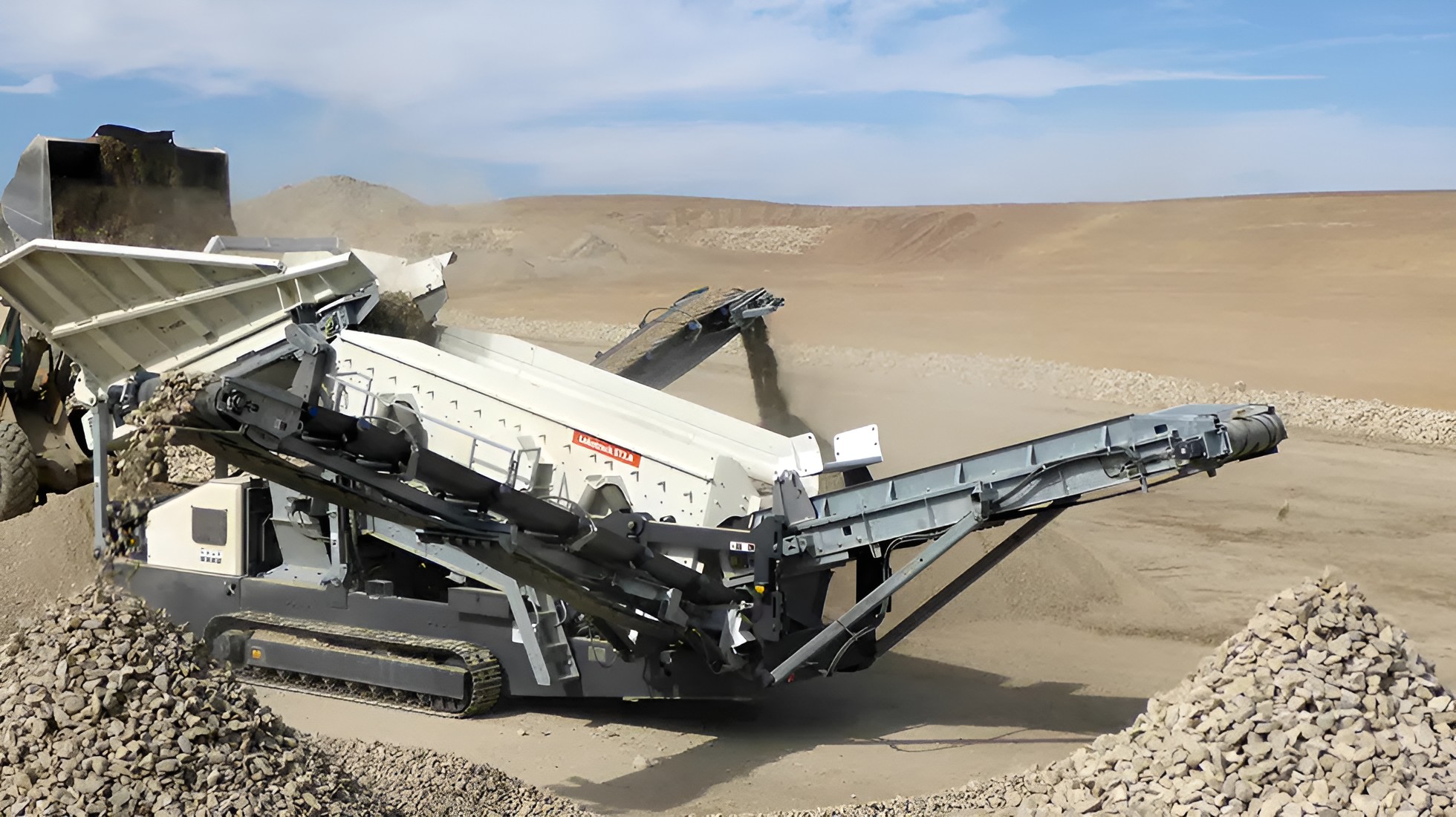
ST2.8 Scalping Applications: Sticky Material, Topsoil, and Demolition Waste
Scalping applications process feed that clogs standard screens easily. Sticky, damp, or irregular loads like topsoil and demolition waste tend to blind fine mesh quickly, which is why heavier rubber panels or larger-aperture wire mesh typically outperform fine polyurethane in this application. The priority here is resisting blinding and pegging, not achieving a precise cut size, since scalping is fundamentally about removing oversized or unwanted content before the real separation work begins downstream.
ST4.8 Triple-Deck Applications: Multi-Product Separation and Finer Cut Sizes
Triple-deck screening splits feed into multiple products at once, which means each deck faces a different combination of particle size and wear demand. The top deck typically handles coarser content and benefits from heavier, impact-resistant media, while lower decks handle finer separation where polyurethane’s consistent aperture sizing protects gradation accuracy across long production runs.
Why the Same Media Choice Rarely Works Well Across Both Machines
A media type selected for scalping sticky topsoil on an ST2.8 is solving a different problem than a media type selected for precise multi-product separation on an ST4.8. Applying one standard choice across both machines usually means one of them is running with the wrong tradeoff, either sacrificing throughput on one or accuracy on the other, and neither compromise shows up clearly until output starts slipping.
Screening Media Selection Guide: Key Factors to Match Media to the Job
Matching media to the application comes down to a handful of concrete factors, and getting each one right depends on the specific machine and material rather than a generic rule of thumb:
- Aperture size and open area, which together determine both cut precision and throughput capacity
- Blinding and pegging risk, which depends heavily on moisture content, stickiness, and particle shape of the feed
- Deck position, since top decks generally need impact resistance while lower decks need precision and consistent aperture life
Getting these three factors right for a specific job matters more than defaulting to whichever media type was used previously, especially when the feed source or product specifications change from one contract to the next.
Signs Your Current Screening Media Is the Wrong Fit
A few patterns point directly to a media mismatch rather than a mechanical problem:
- Reduced throughput or a rising recirculating load, even though the screen itself is running normally
- Uneven wear patterns across the deck, often concentrated where feed distribution or particle characteristics don’t match the media in place
- Frequent blinding or pegging despite regular cleaning, which usually means the aperture shape or media type doesn’t suit what is being processed
Any one of these on its own could point to a feed or setup issue rather than the media itself. Seeing them consistently, especially after a change in feed source or product spec, is a strong signal that the media itself needs reassessment rather than another adjustment to screen angle or stroke.
Sourcing the Right Screening Media in Miami
Matching Media to the Specific Lokotrack Model and Application
The right screening media depends on the specific Lokotrack model, the deck position, and what is actually being processed, not just the general category of screening. An ST2.8 running sticky topsoil and an ST4.8 running multi-product aggregate separation need different media specifications even when both are technically screening similar source content.
How Millennium Machinery Supports Screening Media Selection and Sourcing From Miami
Millennium Machinery, based in Miami, Florida, helps operators match screening media to their specific Lokotrack model and application before placing an order, as an authorized Metso Aggregates partner. That verification step prevents the common mistake of reordering the same media type by default when the job in front of the machine has actually changed.
Quick Answers
How do I know if I need rubber, polyurethane, or wire mesh screening media?
The choice depends on what you are processing and deck position. Abrasive or sticky feed favors rubber or polyurethane, while cost-sensitive, less abrasive applications often work fine with wire mesh.
Why does my screen keep blinding even though I clean it regularly?
Blinding usually points to an aperture or media type mismatch with your feed’s moisture content or stickiness, not a cleaning frequency problem.
Can I use the same screening media on my ST2.8 and ST4.8?
Not usually. Scalping applications on the ST2.8 and fine multi-product separation on the ST4.8 have different wear and precision demands that call for different media choices.
How often should screening media be replaced?
Service life varies by media type and application, from several months for wire mesh in abrasive conditions to well over a year for polyurethane in the right setup.
Does Millennium Machinery help select screening media, not just supply it?
Yes. As an authorized Metso Aggregates partner, Millennium Machinery helps match screening media to the specific Lokotrack model and application before the order ships.
Get the Right Media for Your Screen
Millennium Machinery helps operators select and source the correct Metso screening media for their Lokotrack ST2.8 or ST4.8, backed by authorized Metso Aggregates support from Miami.
Contact our team today to get the right screening media for your operation.