


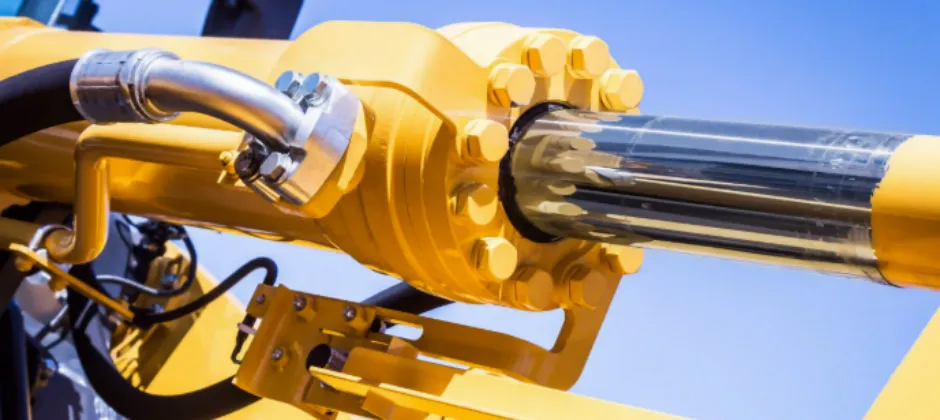
Hydraulic cylinders are the muscles of heavy equipment. They lift the boom, curl the bucket, angle the blade, feed the drill and, on many cone crushers, hold the setting and release tramp iron. When one leaks or drifts, the machine slows down, and a small seal problem can quickly turn into a scored rod or a damaged barrel.
The repair decision comes down to three choices. Reseal when only the seals have failed. Rebuild when the rod or bore is damaged but can be restored. Replace when the damage is structural, or a rebuild would cost close to a new cylinder. This guide shows how to tell which one you need.
What Wears Inside a Hydraulic Cylinder
| Component | What goes wrong | What you notice |
|---|---|---|
| Rod seal and wiper | Wear, cuts, hardening | Oil on the rod or gland, dirt getting in |
| Piston seal | Wear, bypass | Drifting under load, slow or weak movement |
| Rod | Scoring, pitting, chrome damage, bending | Fast seal failure, visible marks, leaks |
| Barrel (bore) | Scoring, ovality, corrosion | Internal leaking, repeat seal failure |
| Gland, wear rings, bushings | Wear, damaged seal grooves | Side play, uneven seal wear |
7 Signs Your Cylinder Needs Repair
- Oil leaking at the gland or rod. Usually a worn rod seal or wiper.
- Drifting or creeping. The boom, bucket or blade sinks when it should hold position. Oil is bypassing the piston seal.
- Slow, weak or spongy movement. Longer cycle times often point to internal leakage.
- Jerky or noisy operation. Air in the oil, contamination or worn internal parts.
- Scored, pitted or flaking rod. A damaged rod destroys new seals quickly.
- Bent rod or misalignment. Common after impacts or side loading during breaker or rock work.
- Rising hydraulic temperature. Internal leakage turns pressure into heat.
Reseal vs Rebuild vs Replace
| Option | What is done | When it fits | Downtime |
|---|---|---|---|
| Reseal | New seal kit: rod seal, piston seal, wiper, wear rings, O-rings | Rod and bore are in good condition; seals reached normal end of life | Shortest |
| Rebuild | Seals plus rod rechroming or replacement, bore honing or sleeving, gland and piston repair, pressure test | Rod or bore is damaged but repairable | Longer, especially if machining is sent out |
| Replace | New or exchange cylinder | Bent beyond tolerance, cracked barrel, deep scoring, or rebuild cost close to new | Short if a cylinder is in stock |
A reseal alone only works if the hard parts are sound. Dropping new seals into a worn cylinder usually means the same leak returns within weeks.
The Hydraulic Cylinder Rebuild Process
A proper rebuild follows a set sequence:
- Clean and inspect outside. Check mounts, pins, welds and the rod for visible damage.
- Disassemble. Remove the gland, rod and piston without scratching sealing surfaces.
- Measure the rod. Check straightness, diameter and chrome condition along its full length.
- Measure the bore. Check for scoring, ovality and corrosion along the barrel.
- Inspect the piston and gland. Seal grooves must be undamaged and to size.
- Restore the hard parts. Rechrome or replace the rod, and hone or sleeve the barrel as needed.
- Fit the right seal kit. Match seal material to the hydraulic fluid and operating temperature.
- Reassemble and torque to specification.
- Pressure test before installing. A tested cylinder will not surprise you on the machine.
- Flush and refill. Clean oil protects the new seals from day one.
When to Replace Instead of Rebuild
Replacement is the safer or cheaper choice when:
- The rod is badly bent or the barrel is cracked. Structural damage under heavy load is a safety risk.
- The bore is deeply scored or out of round beyond what honing can fix.
- The same cylinder keeps failing, which often signals a hidden problem with alignment or the machine itself.
- The rebuild quote approaches the price of a new or exchange cylinder.
- Parts or machining will take longer than a replacement, and the machine is critical to production.
What Drives Hydraulic Cylinder Repair Cost
The biggest factor is the rod. A rod that polishes clean keeps the job at a simple reseal. A pitted, scored or bent rod needs rechroming or replacement, which adds machining time and cost. Other factors include:
- Bore condition and whether honing or a new barrel is needed
- Cylinder size and stroke
- Seal kit type (OEM or quality aftermarket)
- Shop machining, testing and freight
- The cost of the machine sitting idle while you wait
For most mining and quarry operations, that last item is the largest. See the true cost of lead time delays for how fast idle hours add up.
Why Hydraulic Cylinders Fail Early
Most early failures trace back to a few causes:
- Contamination. Dirt and water in the oil scratch rods and bores. Keep filters, breathers and wipers in good condition.
- Rod damage. Rocks, falling material and breaker work can nick the chrome. Our guide to choosing the right hydraulic breaker explains how matching the breaker to the carrier reduces stress.
- Side loading and misalignment. Worn pins and bushings put uneven force on seals.
- Wrong seals for the fluid. Some biodegradable or fire-resistant fluids need specific seal compounds.
- Overheating. High oil temperature hardens seals. A struggling pump can be part of the problem; know the signs of hydraulic pump failure.
Regular inspection is cheaper than any rebuild. Our preventive maintenance checklist for HP series cone crushers includes hydraulic checks you can adapt to other machines.
Planning Ahead: Spares, Exchange Units and Remanufactured Cylinders
For critical machines, such as the main loading excavator or a primary crusher, keeping a spare or exchange cylinder can save days of downtime. Swap it in, then rebuild the failed one at a normal pace. A parts inventory strategy that protects uptime helps decide which cylinders deserve a spare.
Remanufactured cylinders and components are another option. Read when remanufactured parts make sense and compare OEM vs aftermarket parts for seal kits and rods.
How MMPAS Helps With Hydraulic Cylinder Repair
MMPAS supports mining, quarry and construction fleets from Miami, across the US, the Caribbean and South America. Our service support team provides technical support, on-site maintenance and emergency repairs. We help you diagnose the failure, decide between reseal, rebuild and replacement, and source seal kits, rods or complete cylinders through our spare and wear parts network. For Epiroc and Metso equipment, we supply genuine parts as an authorized dealer.
Cylinder leaking or drifting? Contact us with the machine model, cylinder position and photos, and we will help you choose the fastest fix.
Planning a larger investment instead? See heavy equipment financing vs leasing and our guide to the types of heavy equipment.
Frequently Asked Questions
How much does hydraulic cylinder repair cost?
It depends on size and damage. A reseal costs far less than a rebuild with rod rechroming or bore honing. Rod condition is usually the biggest cost factor, so get an inspection before comparing quotes.
Is it cheaper to rebuild or replace a hydraulic cylinder?
Rebuilding is usually cheaper when the rod and barrel can be restored. Replacement makes more sense when the cylinder is structurally damaged or the rebuild price is close to a new unit.
How long does a hydraulic cylinder rebuild take?
A simple reseal can be quick. A rebuild that needs rod rechroming, machining or custom seals can take one to two weeks, which is why critical machines benefit from a spare cylinder.
Can a bent hydraulic cylinder rod be repaired?
A slight bend can sometimes be straightened within tolerance. A rod that is badly bent should be replaced, because it will destroy seals and can fail under load.
What causes a hydraulic cylinder to drift?
Drift is usually caused by oil bypassing a worn piston seal inside the cylinder. A scored bore or a leaking control valve can cause the same symptom, so test before replacing parts.
Can I rebuild a hydraulic cylinder myself?
Small cylinders can be resealed in a well-equipped workshop with the right seal kit and tools. Large mining cylinders need proper measuring, machining and pressure testing, so a specialist shop is safer.